




History of Clinton
Family Owned. Experience Driven.
Cedar Island Marina Clinton, CT
The History of Clinton
The history of Clinton begins long before European settlement, with the Indigenous Hammonasset people who lived along the shoreline and made use of the area’s natural resources. The name “Hammonasset,” meaning “where we dig holes in the ground,” reflects their practice of harvesting shellfish along the coast. These early inhabitants followed seasonal patterns, relying on the land and sea for survival.
European settlers arrived in the mid-1600s, establishing farming and fishing communities along the coast. The area that is now Clinton was originally part of the town of Killingworth, founded in 1663. Life for these early settlers centered on agriculture, small-scale trade, and close ties to the surrounding waters. During this early period, the town also played a small but significant role in the founding of Yale University. In 1701, when the area was still part of Killingworth, the Collegiate School held its earliest classes in the home of its first rector, Abraham Pierson. With no formal campus, Pierson taught a small group of students classical studies, theology, and philosophy from his home. Although the original structure no longer exists, the site is recognized locally, linking Clinton to the earliest days of Yale before the school moved to New Haven in 1716.
Over time, the coastal village grew distinct from inland Killingworth, and in 1838 it officially separated to become the town of Clinton, named after DeWitt Clinton, who was best known for his leadership in building the Erie Canal.
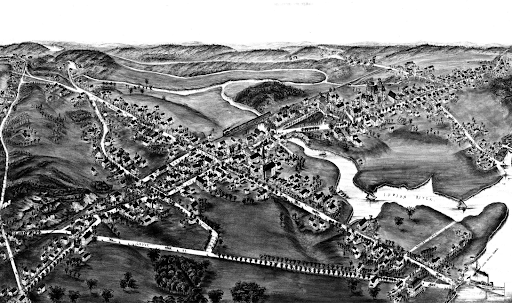
Bird’s-Eye View of Clinton, Connecticut, 1881
Clinton’s location along Long Island Sound played a major role in shaping its economy and identity. During the 18th and 19th centuries, shipbuilding became an important industry, particularly along the Indian River and nearby harbor areas, where shipyards produced vessels for trade and transportation. Some of these ships, known as “brownstoners,” carried Portland brownstone to markets along the Connecticut River and beyond. Fishing and coastal commerce also thrived, connecting Clinton to regional trade networks and supporting the local economy.
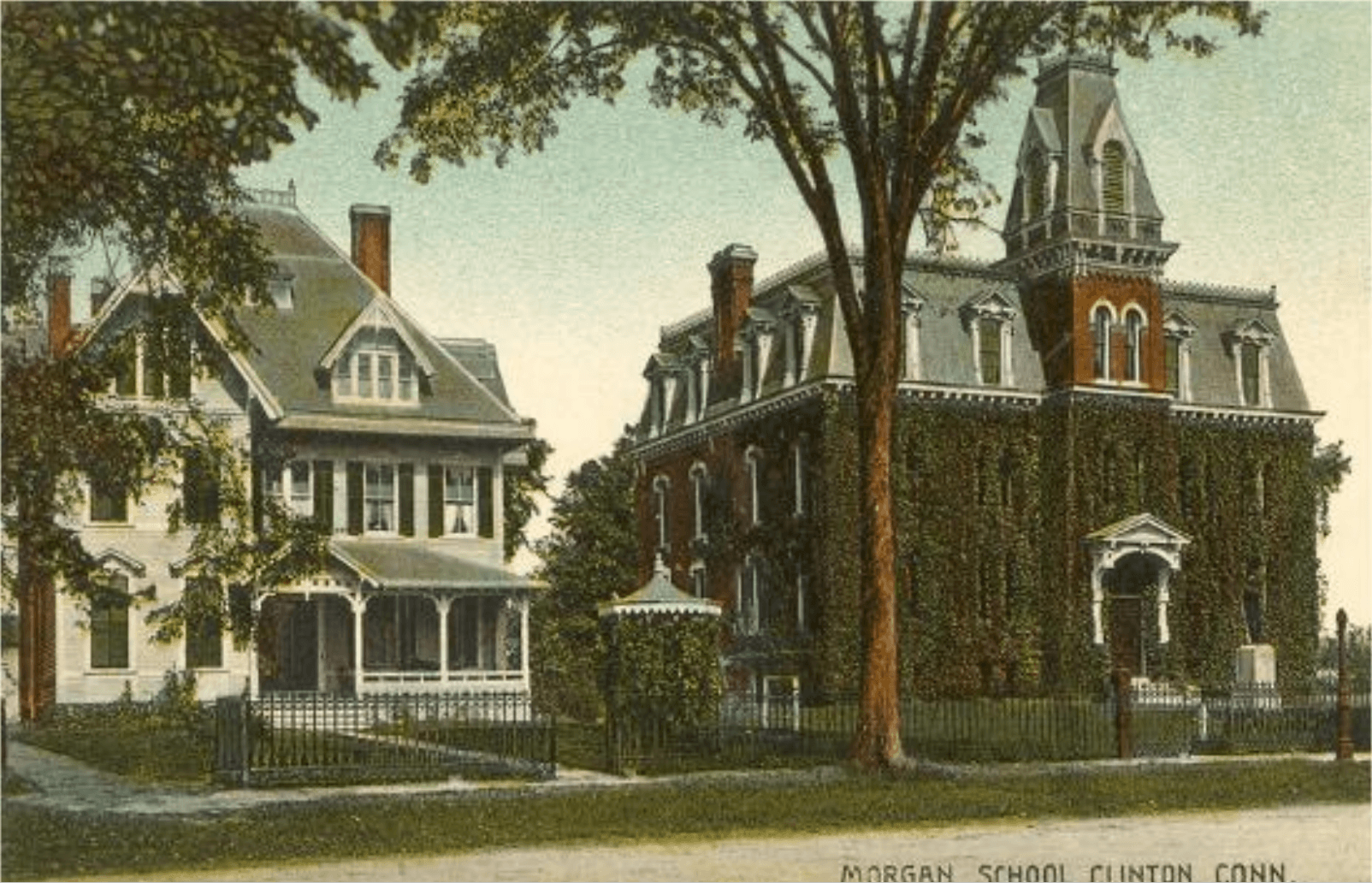
The Morgan School, Clinton, Connecticut – Postcard, 1910
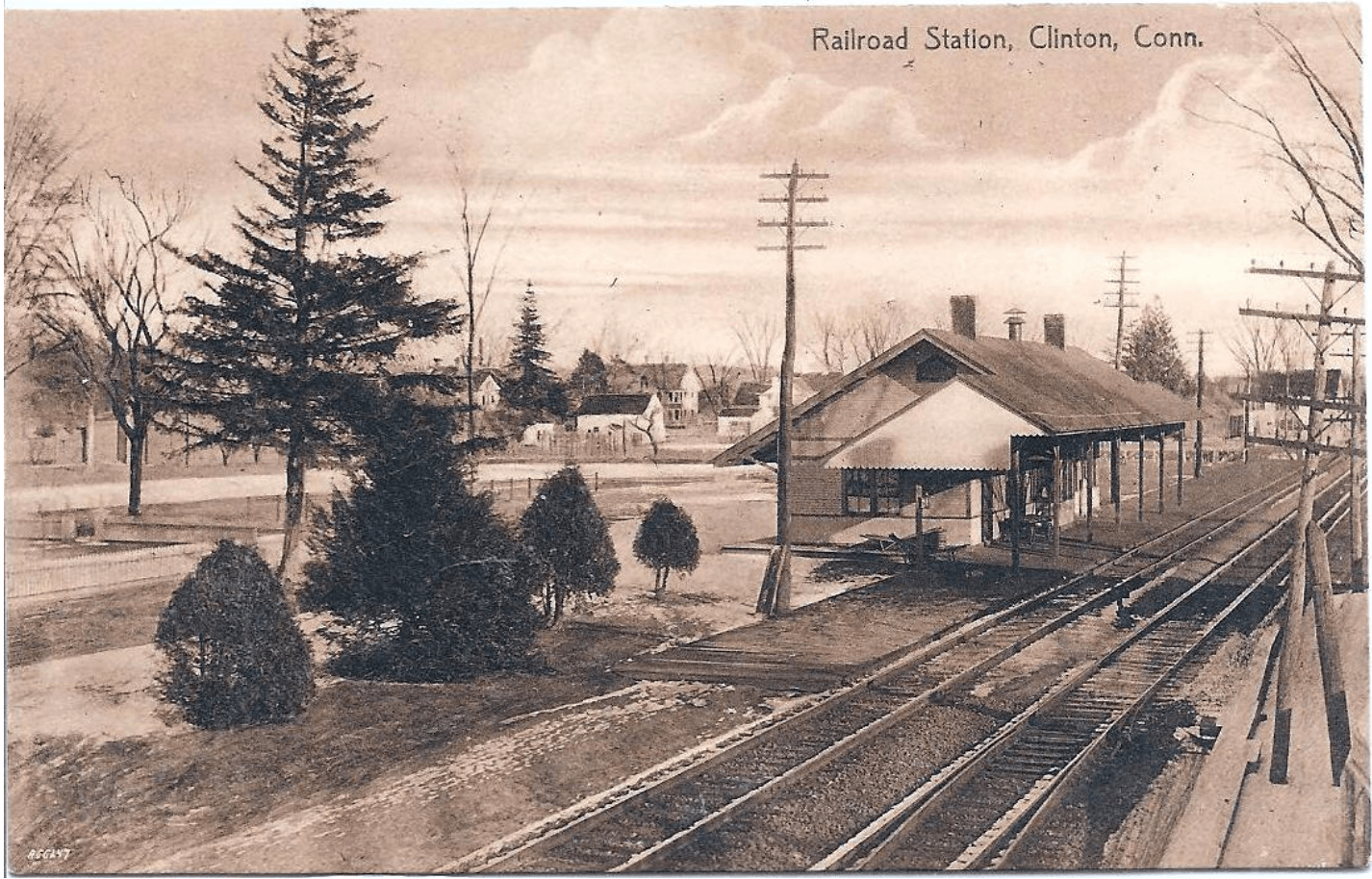
The Clinton Railroad Station, 1897 – Early Postcard
The 19th century also saw the influence of prominent individuals who helped shape the town’s development. Among them was Charles Morgan, who built a fortune in shipping and later in railroads, including major ventures in the Gulf Coast region. Morgan maintained strong ties to Clinton and became an important benefactor to the town. In his will, he left funds to support education, which led to the establishment of The Morgan School which continues to serve Clinton students today.
As the 1800s progressed, Clinton remained a small but active town with a mixed economy of agriculture, maritime trade, and local industry. Businesses like Pond’s Extract, which used locally grown witch hazel, connected Clinton to a growing national market. The arrival of the railroad in the 19th century brought new opportunities, making the shoreline more accessible and helping to establish Clinton as a summer destination. Visitors were drawn to its beaches, fresh air, and coastal setting, leading to the development of hotels, cottages, and seasonal homes along the shore.
By the early 20th century, Clinton began to transition from a seasonal resort area into a more permanent, year-round community. Local businesses expanded, schools developed, and civic institutions grew stronger. Neighborhoods that were once filled with summer visitors gradually became home to full-time residents. Despite these changes, the town has held onto much of its historic character, with a strong connection to its past still visible today.
Today, Clinton’s history can be seen in its harbor, along the Indian River, and throughout its shoreline and historic areas. From its Indigenous roots to its shipbuilding past and its growth as a coastal community, Clinton remains closely tied to the land and water that shaped it.
Works Cited:
Connecticut History https://connecticuthistory.org/towns-page/clinton
Clinton Historical Society https://clintoncthistory.org
Connecticut Society https://www.colonialwarsct.org/towns/clinton.htm